Helpdesk

Our Data Steward Service Center (DSSC)

Our expert team of data stewards helps you with all your research data management needs – in agrosystems science and beyond. We are here for you in all phases of the data lifecycle – from data search to the creation of a data management plan and data publication.

We will happily support you, if…

  • … you are looking for available data concerning soil, field experiments, phenology or the like.
  • … you want to publish your data, i. e. along your paper or dissertation and are looking for an appropriate repository.
  • … you are planning a project and need advice on the creation of a data policy.
  • … you are looking for appropriate tools for the analysis and interpretation of certain data.
  • … you are in search of a custom-tailored training about research data management for your working group.
  • … you have an exciting challenge that is also of interest to other researchers.
  • … you have other questions concerning research data management.

This FAIRagro service is free and open to the whole agrosystem research community!

Please get in touch if you need support.

Request

    Data protection *

    Our Data Stewards

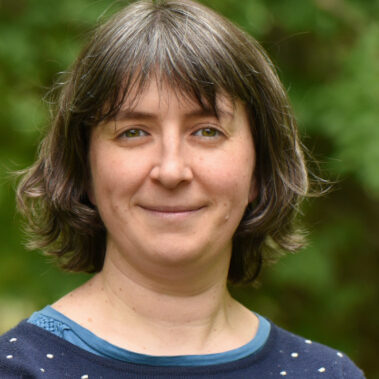
    Elena Rey Mazón

    Elena

    I am working with the Leibniz Institute of Plant Genetics and Crop Plant Research (IPK) in Gatersleben, specifically in bioinformatics and information technology.

    As an agronomist specializing in environment and land use planning, plant phenotyping and data curation are my areas of expertise.

    How did I get into data management?

    When phenotyping an experiment, I had to clean not only my own data, but also that of others; and so I gradually entered the world of data management. For a while I combined both facets of the job, but today I only handle data management tasks.

    What does good data management mean to me?

    … that I am able to find what I need in the data created by others (and also in my own). Furthermore, good data management promotes the integrity, accessibility, and longevity of research data, thus  facilitating collaboration, reproducibility, and innovation.

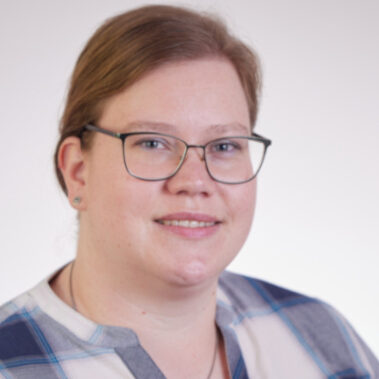
    Lucia Vedder

    Lucia

    I am working at the Rheinische Friedrich-Wilhelms-Universität Bonn – in the Institute of Geodesy and Geoinformation (IGG) – Work Group Information Management.

    I am educated as B.Sc. Biology, M.Sc. Bioinformatics and I am currently studying for a PhD in Agricultural Sciences.

    My areas of expertise are mainly field robotics and related sensor data, genetic data (“omics” data) and general field data.

    How did I get into data management?

    During my PhD studies, I first documented mainly my own research data. Afterwards, I additionally expanded my knowledge in data management as a data steward in the Cluster of Excellence PhenoRob at the University of Bonn.

    What does good data management mean to me?

    … that data are annotated in such a way that a third person can assess them only on the basis of the description. Furthermore, the data should also be findable at appropriate places.

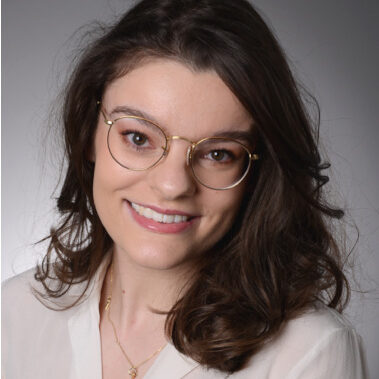
    Lea Sophie Singson

    Lea

    I am responsible for intellectual property rights at FIZ Karlsruhe – Leibniz Institute for Information Infrastructure – in Eggenstein-Leopoldshafen.

    In the course of my law studies, I majored in criminal science (first German state exam) and, after a legal clerkship at a district court, I passed the second German state exam with a focus on criminal justice.

    My expertise is in answering any legal questions and problems.

    How did I get into data management?

    I was looking for new challenges and horizons and finally found them at FIZ Karlsruhe.

    What does good data management mean to me?

    The most important thing is always to ensure that data is handled responsibly and ethically – and within the framework of applicable law.

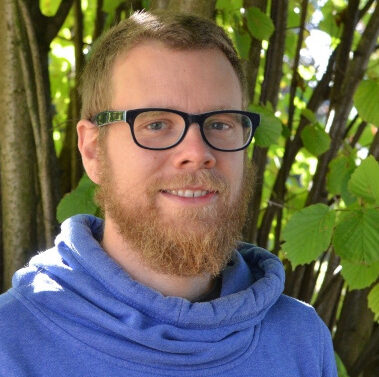
    Marcus Schmidt

    Marcus

    I am an employee of the Center for Agricultural Land Research (ZALF) e.V. in Müncheberg, where I work in the Research Data Management Working Group.

    My specialties are soil data, data analysis and especially digital tools.

    How did I get into data management?

    While working on the combined analysis of digital data, I started learning about its structures and the importance of describing them.

    Finally, this led to a coordination job at the BonaRes repository for soil and agricultural data.

    What does good data management mean to me?

    For me, it is important to be aware of the cycle of one’s data. That is, are they reliably collected, well described, and can they be reused as they are? The survival of data in future research is the main driver of my work.

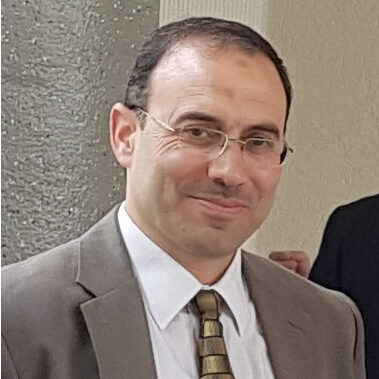
    Wahib Sahwan

    Wahib

    I am employed at the Center for Agricultural Landscape Research (ZALF) e.V. in Müncheberg and work there mainly in the research data management group.

    My PhD is in Geographic Information Systems and Remote Sensing. My areas of expertise are soil spectroscopy, digital soil mapping, and land use and landscape pattern change monitoring.

    How did I get into data management?

    I have been involved with the use of remote sensing data in several research projects on landscape ecology at universities and non-university research institutions since about 2004.

    What does good data management mean to me?

    Since large and complex datasets as well as results are involved, the sustainable use of the collected experience is always a challenge. For many researchers, detailed documentation or good structuring of these data has become a key to solving many reusability problems.

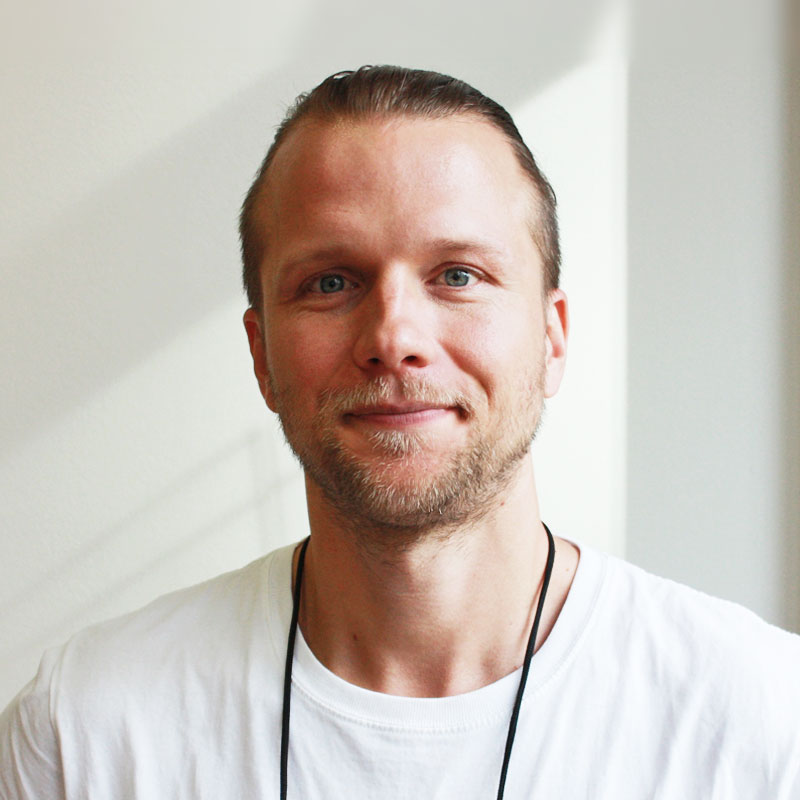
    Paul Peschel

    Paul

    I am responsible for geodata in the Digitalization and Artificial Intelligence department at the Julius Kühn Institute.

    Before that, I was working as a software developer, building applications and pipelines for orchestrating and analyzing large EO datasets  with a focus on complex environmental and geospatial data, including climate, biodiversity, and land use.

    How did I get into data management?

    In my work, I repeatedly encountered unstructured, poorly documented, or hard-to-access data. Even the most advanced models and tools cannot reach their full potential without a solid data foundation and that’s what I aim to improve.

    What does good data management mean to me?

    Big geodata, AI/ML, and cloud-based infrastructures are changing the way data is turned into knowledge. Good data management means orchestrating data spaces in a purposeful way – using standards, interfaces, and metadata- as a foundation for well-informed decision-making in science and policy.

    If you have a general question or suggestion concerning the FAIRagro project, do not hesitate to write to:

    Toolbox

    If you work with agricultural research data, want to find out more about it, search for it, publish it or manage it, you’ve come to the right place. We have compiled overviews and instructions to support you in dealing with such data and its special features. Our toolbox is up to date and is constantly being expanded. If you have any ideas or suggestions for further contributions, please contact us via our helpdesk.

    • Facts on Facts – Data Types in Agrosystem Science
      What data types exist in agrosystem science? What do I have to consider when collecting and publishing data – including the legal perspective? Here we give a short overview of relevant data types and their peculiarities regarding research data management. With hints to our expertises in the DSSC and further ressources.
    • How to learn and teach RDM – a collection
      Are you looking for ways to learn about handling research data? Do you need teaching materials that you can use to create your own training courses? – We have compiled a collection of (mostly) open educational resources on research data management in agricultural sciences and related domains for you!
    • Publishing research code FAIR – a roadmap
      Would you like to publish your self-developed code (in Python, R, etc.) in parallel to your research results, but as an independent citable source? Then you’ve come to the right place – we can help you through the labyrinth of existing methods, standards and recommendations. Here you will find a current roadmap to publish code FAIR.
    • Where to find a fitting repository?
      Are you looking for a suitable repository to publish your research data – or do you need well-described data for subsequent use? We help you through the jungle of existing infrastructure. Here you can find a current list of repo recommendations from our helpdesk.